Studio journal
What to Expect in a Beginner Hand-Building Workshop
Pinch, coil and slab explained — what your hands actually do in a first hand-building session near Dharamshala, what usually goes wrong, and how to choose what to make.
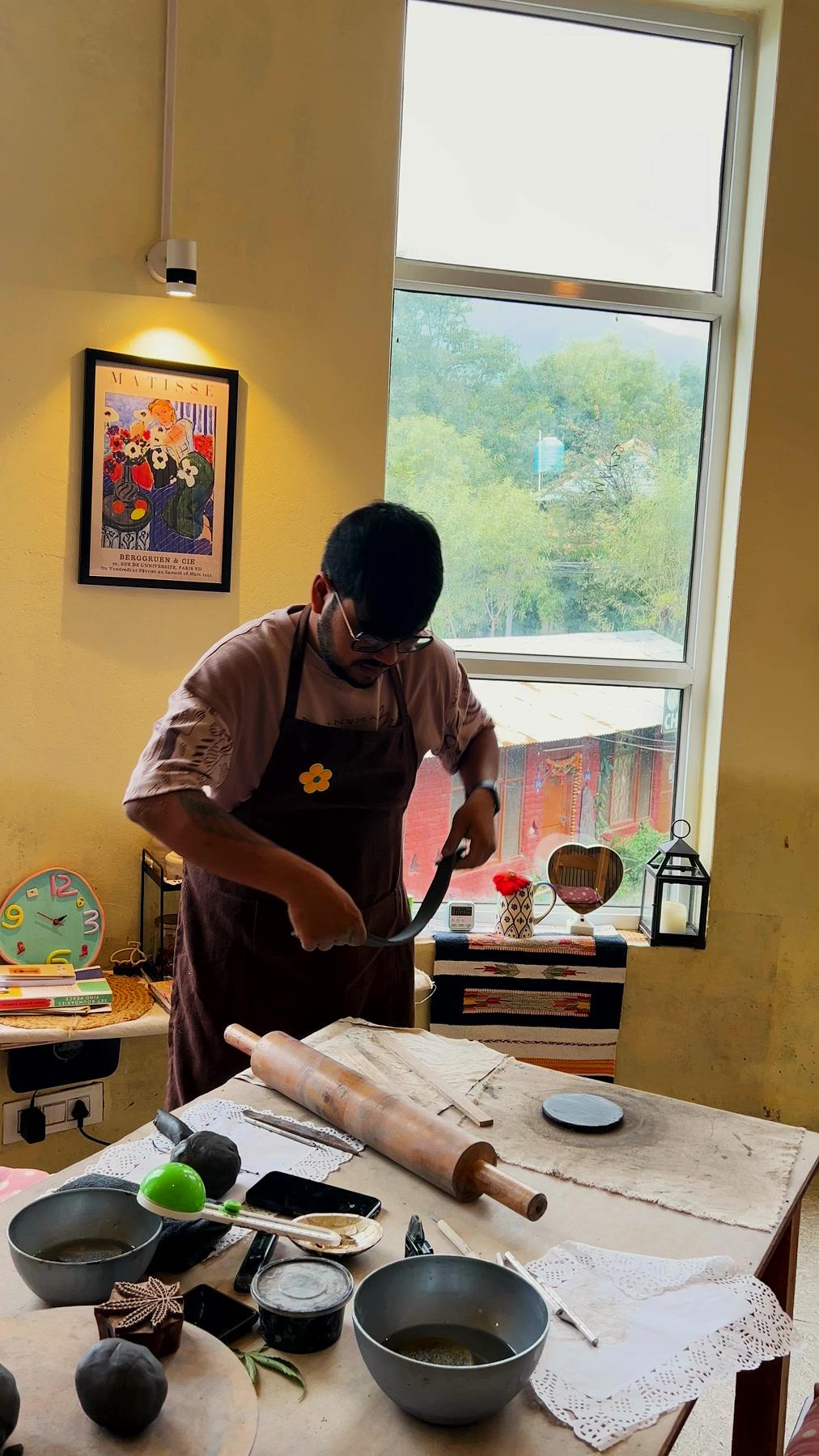
Hand-building is pottery without the wheel. It is how pots were made for thousands of years before anyone thought to spin them, and it is almost always the better place to start — because nothing sits between your fingers and the material.
Here is what actually happens in a first session, so you arrive knowing what your hands will be asked to do.
The three ways to build without a wheel
Nearly everything you will make by hand comes out of one of these, or a combination.
Pinching. You start with a ball of clay, push a thumb into the middle, and work outward, turning as you go. It sounds crude and it is astonishingly sensitive — you are feeling for wall thickness with your fingertips, and within twenty minutes most people can tell a 6mm wall from a 10mm one without looking. Pinch pots become mugs, small bowls, cups.
Coiling. You roll ropes of clay and stack them, blending each into the one below. Coiling is how you get height and how you get shapes a wheel would refuse — asymmetric, leaning, deliberately irregular. It is slower and more forgiving.
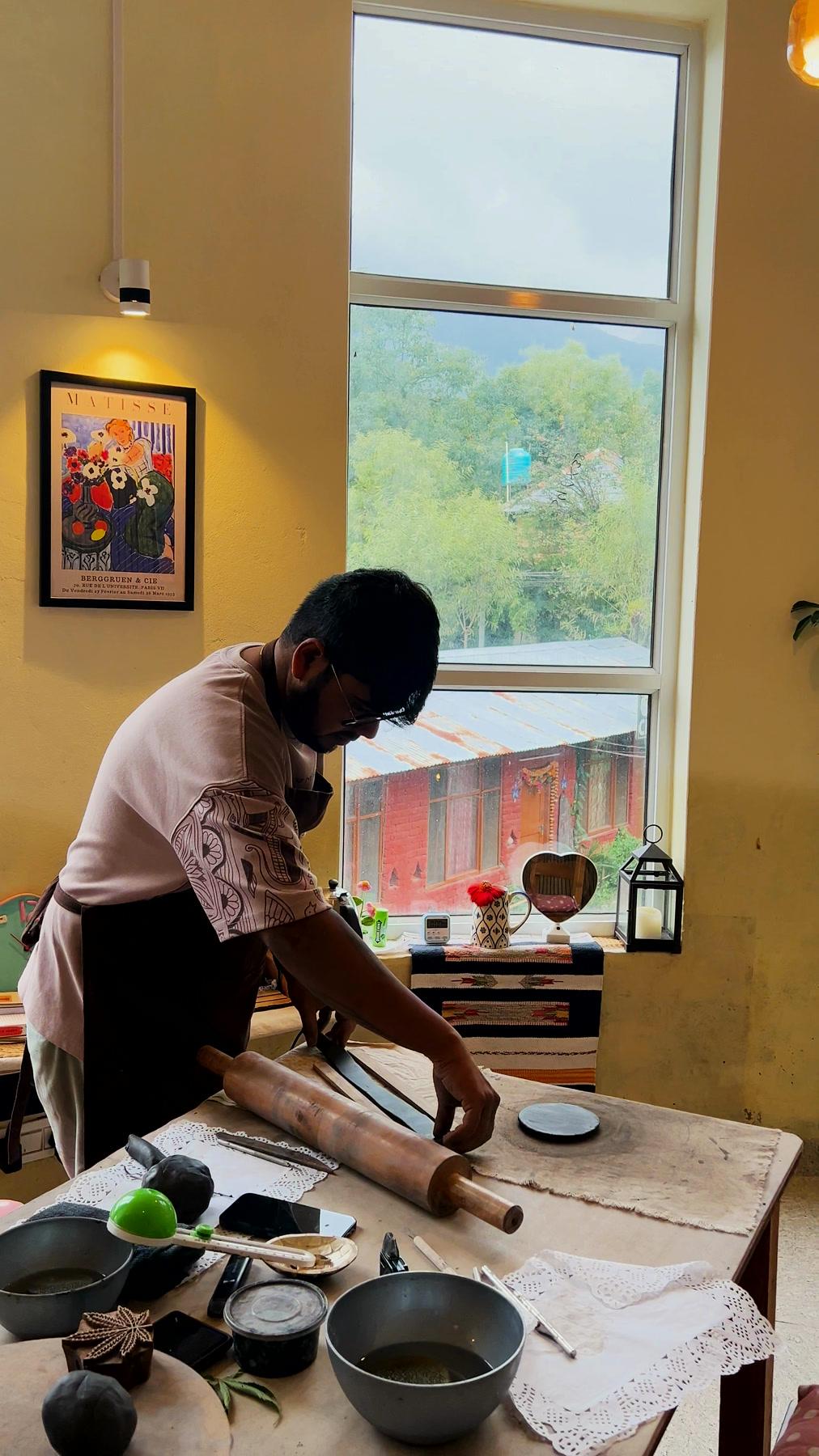
Slabs. You roll clay flat, cut shapes, and join them. This is the technique behind our botanical work: press a leaf gathered off the hillside into a soft slab, peel it away, and the veins stay. Slab work suits anything with flat planes — trays, dishes, tiles, boxes.
Most first sessions are pinch or slab. Coiling tends to arrive once you have a feel for how wet clay behaves.
What your first two hours look like
The block is two hours: about ninety minutes of making, then clean-up.
You will spend the first ten minutes not making anything. Mita starts everyone with the clay itself — wedging it, feeling how it resists, learning what "too wet" and "too dry" feel like in the hand. This seems like a delay and is the opposite. Almost every problem later in a session traces back to clay that was the wrong consistency and nobody noticed.
Then you build. Somewhere around the forty-minute mark most people hit the same wall — the piece is uneven, one side is thinner, and the instinct is to keep thinning it to fix it. That is the moment the teaching matters, and it is the reason we cap sessions at six people.
The last stretch is finishing: smoothing, joining a handle if the form takes one, and marking the base.
What usually goes wrong, and why that is fine
Uneven walls. Universal. Your dominant hand works harder than the other one and the piece records that honestly.
Cracks at the join. Clay joined dry, or joined without scoring, separates later. You will be shown how to score and slip; it is the single most useful thing you learn on day one.
Over-thinning. The most common first-session mistake, and the hardest to undo. Thin walls collapse in drying or blow out in the kiln.
None of this makes the piece a failure. A hand-built mug with a slightly crooked handle is doing what handmade objects do — it records the hour you spent on it. The alternative is buying something a machine made, and you can do that anywhere.
What to make first
If you want something you will genuinely use every day: a pinch mug. Small, forgiving, and the handle teaches you joining.
If you want something to give away: a botanical slab dish. Foraged leaf, pressed impression, glazed. It photographs beautifully and it is unrepeatable — that leaf existed once.
If you are here with children: slab work, every time. Rolling and cutting is immediately satisfying for a five-year-old in a way that pinching is not.
Then the waiting
Everything you build in clay needs three to six weeks before it comes back to you: drying, a bisque firing, glazing, then a second firing. You cannot rush it and no studio can.
If you are travelling and that does not work, two options: we ship within India for ₹200 a piece, or you take a Sip & Paint session instead and go home the same day with a piece you painted rather than built.
Hand-building or the wheel?
Start with hand-building if you want direct contact with the material and time to think. Choose the wheel if the thing you actually came for is the spinning — centring clay is a specific and addictive skill, and there is no substitute for it.
Plenty of people do a hand-building workshop, then come back for monthly classes to learn to throw. That is the path we would recommend, and it is the cheaper one per hour.
Come and get your hands dirty
Details of each format are on the workshops page. Tell us your dates on WhatsApp and we will confirm a slot and talk through which session suits — including what you would realistically leave with. If you want the background on the technique first, the hand-building guide goes deeper.
Keep exploring
Book a session
Tell us the dates you are around and we will confirm a slot — or just message +91 88796 54294 and ask us anything first.