Residential · Rakkar, Himachal Pradesh
Pottery
Immersiontwo & three weeks
Fifty or seventy-five guided hours, a wheel that is yours for the whole course, a room and three meals a day — in a studio that holds six people, beneath the Dhauladhar range.
- 75hrs
- Guided hours, three-week
- 1
- Wheel, yours throughout
- 6max
- People in the studio
- 1
- Teacher, every session
From ₹90,000, everything included · 30% deposit to hold
Before you read further
Two different things get called the same word.
One is a residency: a room, meals, and a key to a studio. You work alone, at your own pace, on your own ideas. It is genuinely the right choice if you already have a practice and what you are short of is time and space.
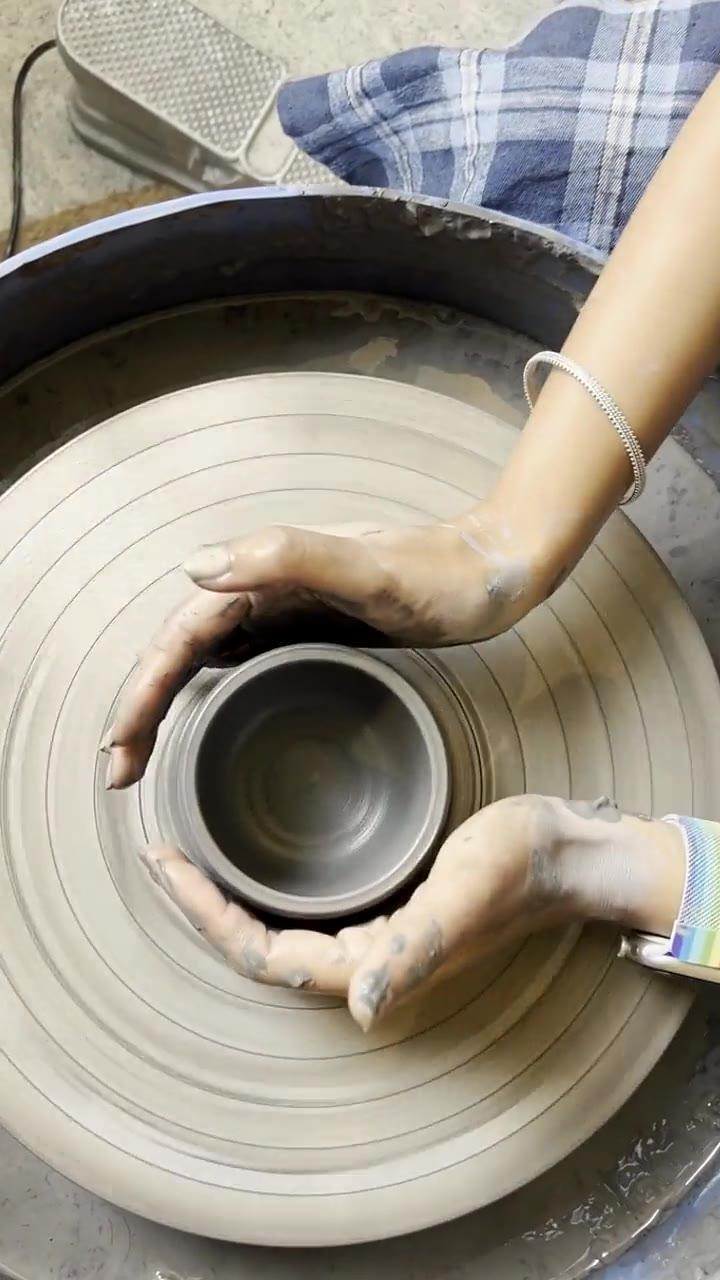
The other is teaching: someone stands beside you for five hours a day and corrects your hands. That is what this is.
If you already throw, book a residency. If you want to leave able to throw, read on.
What it actually feels like
Nobody is good at this in the first week.
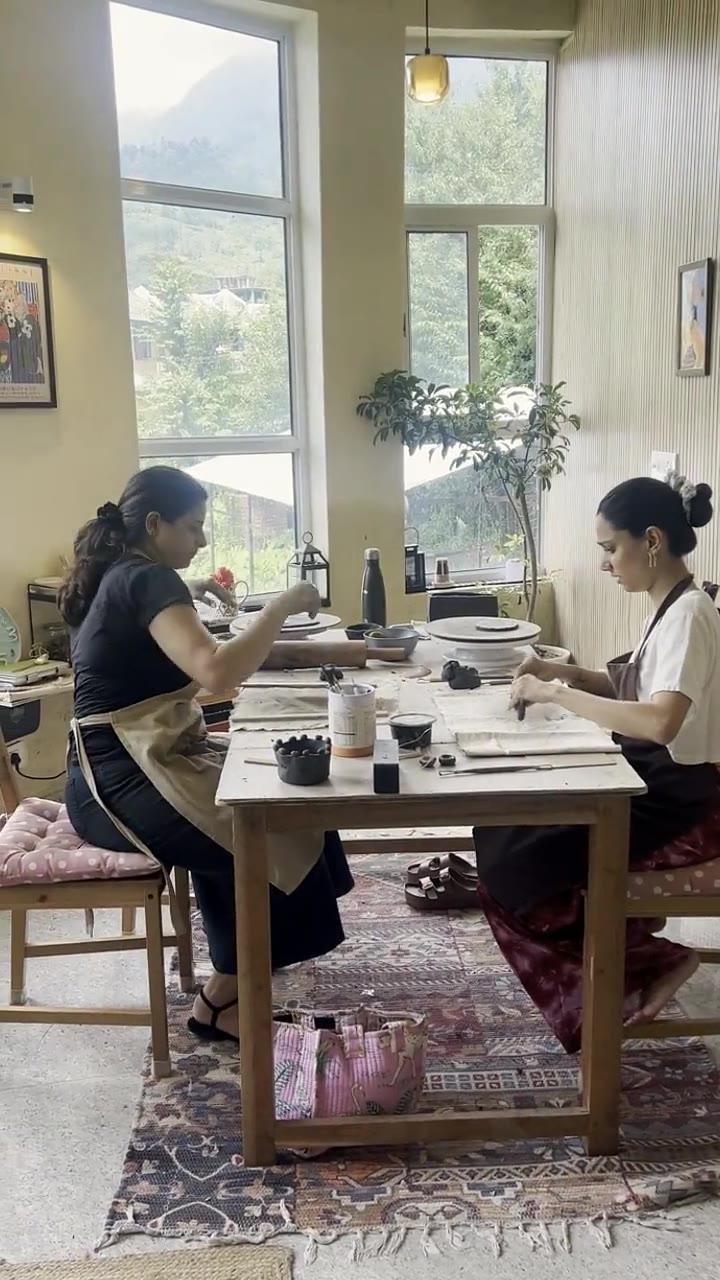
The clay will collapse. It will collapse on the first day and again on the fourth, and somewhere in there you will quietly decide you are the one person who cannot learn this. Everybody decides that. It is not a verdict on you — it is simply what learning to centre feels like from the inside, and knowing that in advance is most of what gets people through it.
Madhumita learned the same way: two years of centering, collapsing and beginning again before there was a studio here at all. She is not working from a syllabus somebody handed her. She knows what your hands are doing wrong because hers did the same thing, and she remembers the week it stopped.
And it does stop. Usually in the second week, without announcing itself — the wheel stops fighting you, and your hands begin doing things you could not explain if someone asked. That shift is the whole reason this is measured in weeks rather than afternoons. It cannot be hurried and nobody can hand it to you. It just needs a wheel of your own, and someone watching every session until it arrives.
What you will learn
You arrive curious. You leave a potter.
Every session is taught, sequenced and built on the one before. By the end you are not someone who has tried pottery — you are an intermediate potter who can centre reliably, throw a form you intended, trim it, handle it, glaze it, fire it, and explain to someone else why it worked.
IThe material and the handDays 1–4Clay bodies, wedging, pinch and coil, slab construction, surface and reclaim — everything before the wheel.+
- Clay bodies — working in stoneware: plasticity, shrinkage rates, water content, and how to tell what a body will and will not do
- Wedging — ram's head and spiral, de-airing properly, reading moisture by feel rather than by eye
- Pinch and coil — even walls, closed forms, building tall, compressing and joining so the seam never opens
- Slab work — rolling to a consistent thickness with guides, soft-slab versus stiff-slab construction, templates, press moulds, darts and mitred seams
- Surface at leather-hard — botanical leaf imprinting, texture, sgraffito, carving, burnishing
- Reclaim — the slurry bucket, the plaster bat, wedging dead clay back to life — the discipline that makes a studio sustainable
IIThe wheelDays 3–12, dailyCentering through to a matched set: opening, pulling, trimming, handles, lids and repeat throwing.+
- Setting up — bat systems, water discipline, posture, wheel speed, and why most beginners fail on posture alone
- Centering — 500 g, then 1 kg, then 2 kg — coning up and down until it stops being a fight
- Opening and the floor — measuring floor thickness with a needle, compressing the base against S-cracks
- Pulling walls — the three-pull cylinder, an even wall from foot to lip, and knowing when to stop
- Form families — cylinders into mugs, tumblers and vases; the bowl curve; plates and shallow forms
- Trimming — chucks, foot rings, and getting the weight of a finished pot right in the hand
- Handles and lids — pulled handles that will not crack; galleries, flanges, knobs, and throwing a lid that fits
- Repeat throwing — off the hump for small forms; calipers, set weights, and a matched set that looks like a set
IIIFire, glaze and surfaceDays 8–15The bisque, glaze chemistry, application and hand painting, diagnosing faults, and the glaze fire itself.+
- The bisque — loading and stacking, candling, the bisque cycle and what heat is actually doing to the clay
- Glaze materials — silica, alumina and flux — what makes a glaze a glaze rather than a coating
- Mixing and testing — sieving, specific gravity, and reading your own test tiles
- Application — dipping, pouring, brushing, wax resist, layering, and the timing that separates a clean edge from a mess
- Hand painting — underglaze and slip, brushwork, banding, mishima inlay, and painting on bisque
- Faults and fixes — crawling, pinholing, crazing, running — how to diagnose each from the fired evidence
- The glaze fire — cones, ramp and soak, oxidation, and stacking a glazed load without ruining a shelf
IVThe studio you might buildThree-week course onlyEquipment, sourcing, costing a piece, weekly workflow and selling — the business behind the craft.+
- Equipment — wheels, electric versus gas kilns, pugmill versus hand reclaim, shelving, wet areas, ventilation
- Sourcing — clay, glaze materials and tools, and how supply differs between Europe and India
- Costing a piece — clay, firing, glaze, labour and loss, and how to price your work without apologising for it
- Workflow — throwing day, trimming day, glaze day — how a one-person studio runs a week
- Selling — photographing ceramics, editions versus one-offs, and where the first customers come from
By the last day you will be able to
- Centre 1–2 kg of clay without thinking about it
- Throw a cylinder, a bowl and a mug to an intended height and width
- Throw a matched set to a set weight using calipers
- Trim a clean foot ring and judge a pot's balance by hand
- Pull and attach a handle that survives the kiln
- Build by slab and coil at scale, with sound joins
- Mix, apply and troubleshoot a glaze
- Load and fire a bisque and a glaze kiln unsupervised
The rhythm
Five days at the wheel. Two for the valley.
You work in the studio five days a week, 11 AM – 5 PM, with an hour for lunch in the middle — five hours at the wheel each day. Two days are yours. Most guests take Monday and Tuesday, when the valley is quietest, but the days are yours to choose.
Clay is slow, and it punishes hurry. Wall thickness is learned by feel, not by looking. Drying happens at its own pace or pieces crack. The rest days are not padding — they are part of how the material works.
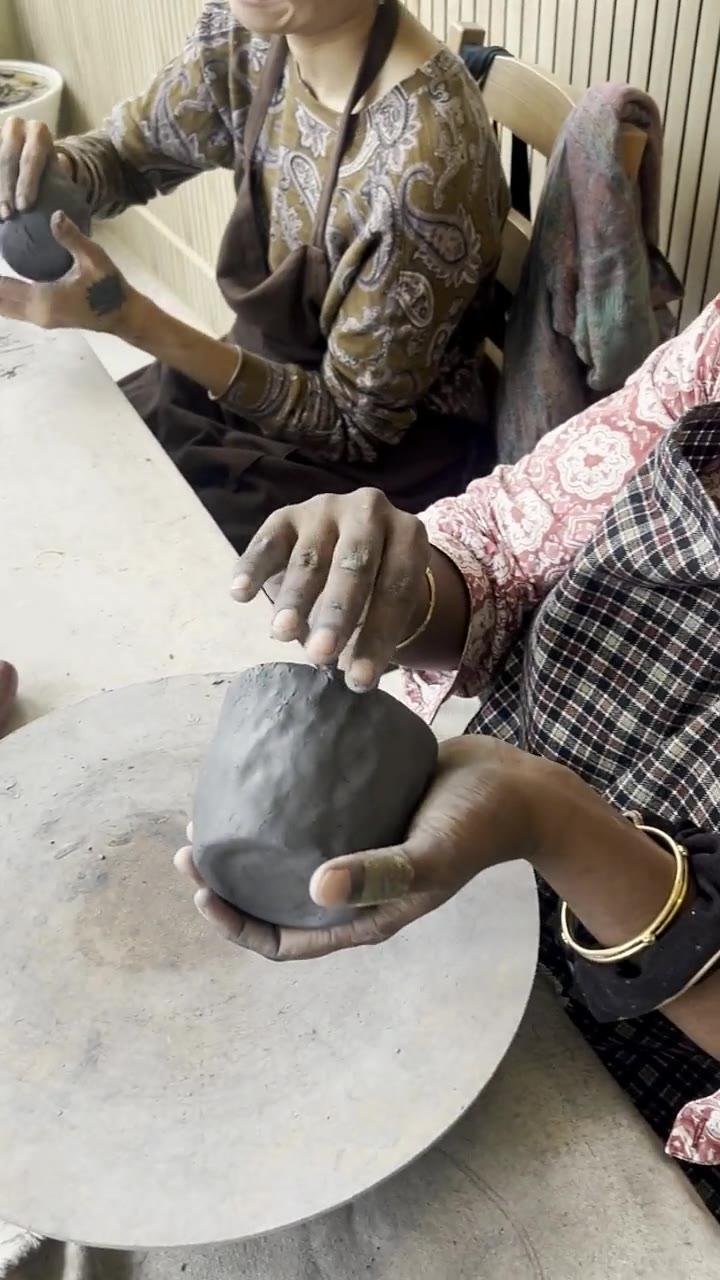
Five hours a day, and the shape of them matters. You work in loops: about forty-five minutes at the wheel on your own, then fifteen with Madhumita looking at what you made and telling you what your hands actually did. Then again, and again. She is in the room for all five hours — but the hours are yours to work in, because nobody has ever learned to centre by being talked at.
Taking your work home
A piece has to dry, be bisque fired, be glazed and be fired again — a fortnight, comfortably. So we plan the firing calendar backwards from the day you leave, and pack your work for the aircraft ourselves. We do not ship internationally.
Choosing your dates
March–June and September–November are the easiest months: long dry days and clay that behaves. July and August are the monsoon — beautiful, but drying is slower and we build in more time.
Where you will live
Two rooms. Both a short walk from the wheel.
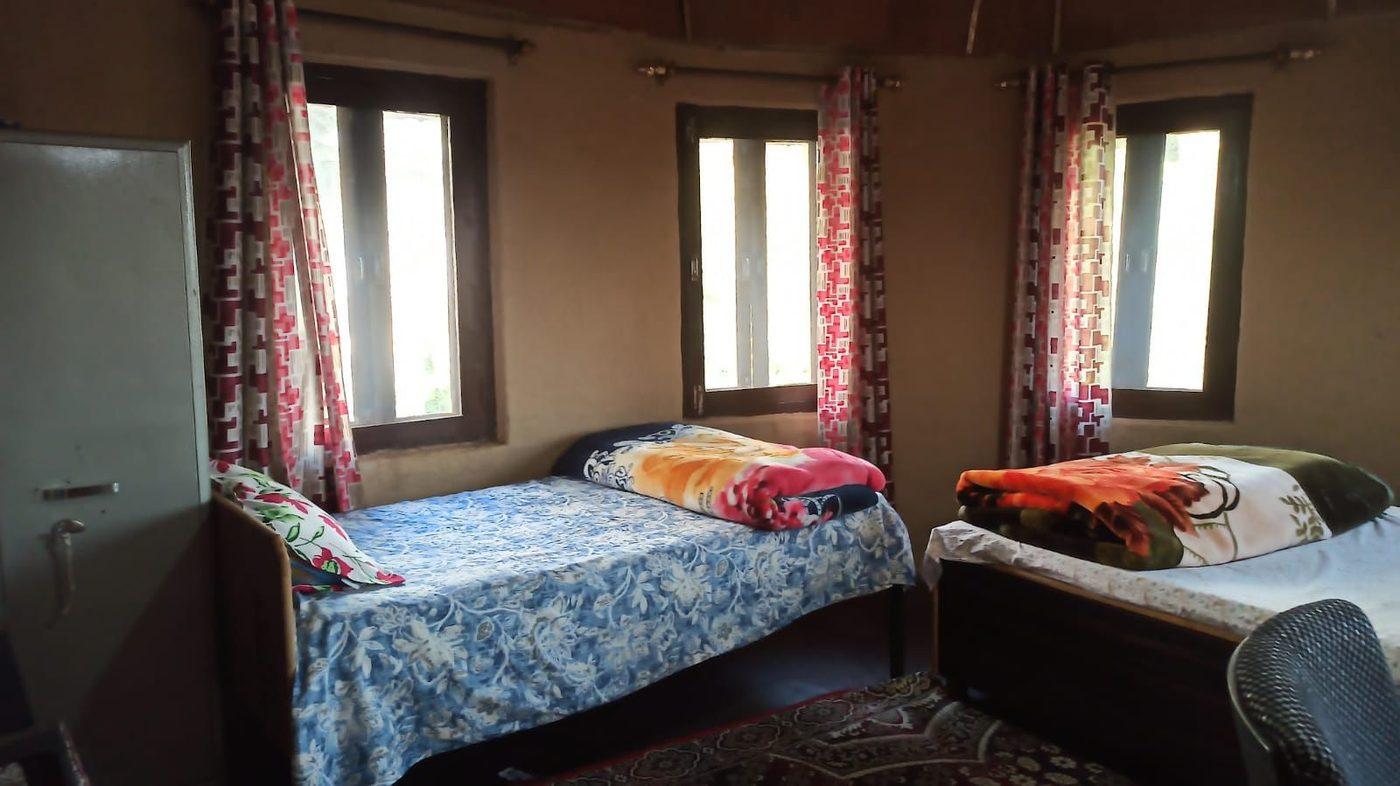
The Mud House
A clean, private room in a traditional mud-and-slate village house — cool through summer, warm in winter, and honest in the way old buildings are. Full of the character that brings people to this valley.
- A private room, yours alone on a solo booking
- Private bathroom
- Hot water, heating and fast Wi-Fi
- Garden, orchard and a shared terrace
- A short walk from the studio
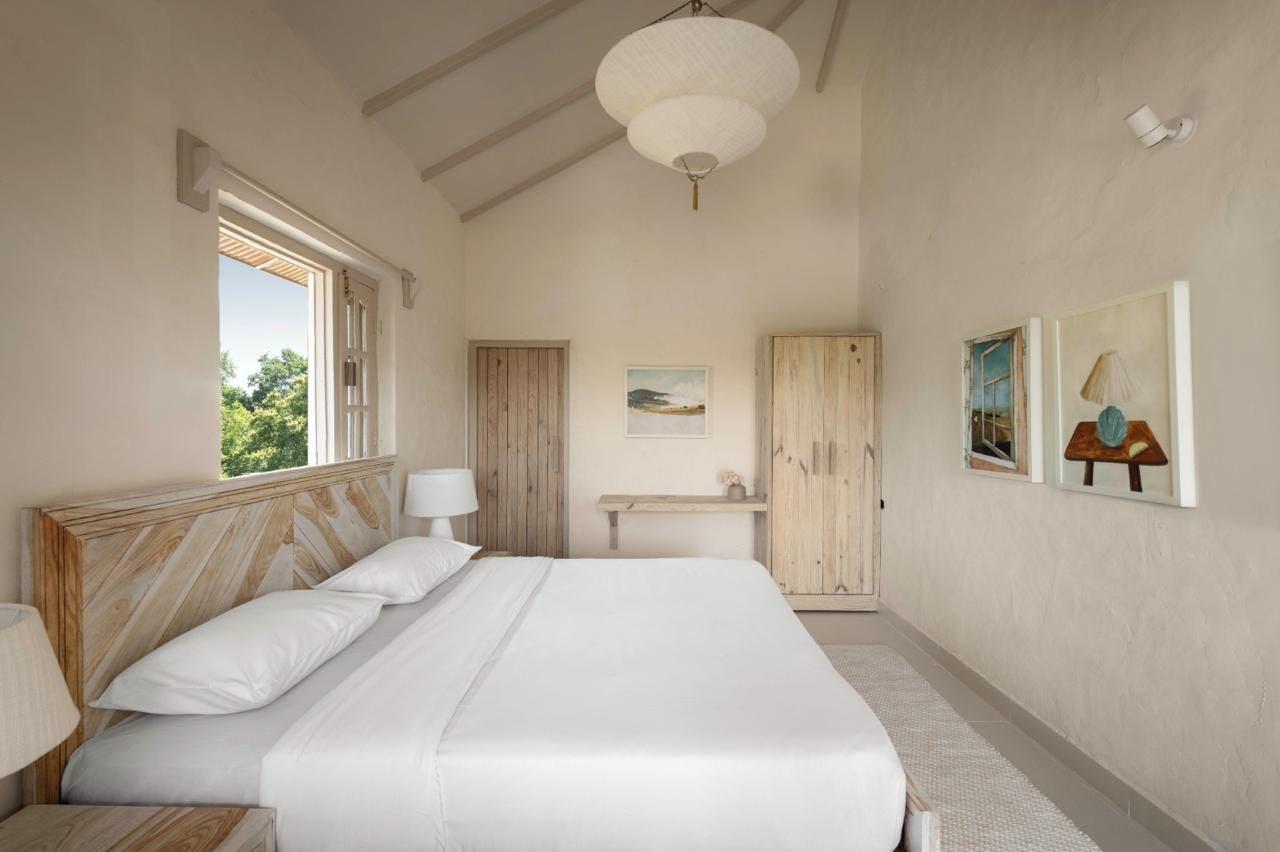
The Premium Room
A larger, quieter apartment with its own sitting room and kitchenette, so your morning coffee and your late tea run on your schedule rather than anyone else's.
- A private room, yours alone on a solo booking
- Separate bedroom and sitting room
- Private kitchenette and bathroom
- Hot water, heating and fast Wi-Fi
- Housekeeping and laundry included
Booking on your own, as most guests do? The room is yours alone — we never put two guests who do not know each other in the same room. Travelling as a pair and happy to share? Message us and we will quote for the two of you.
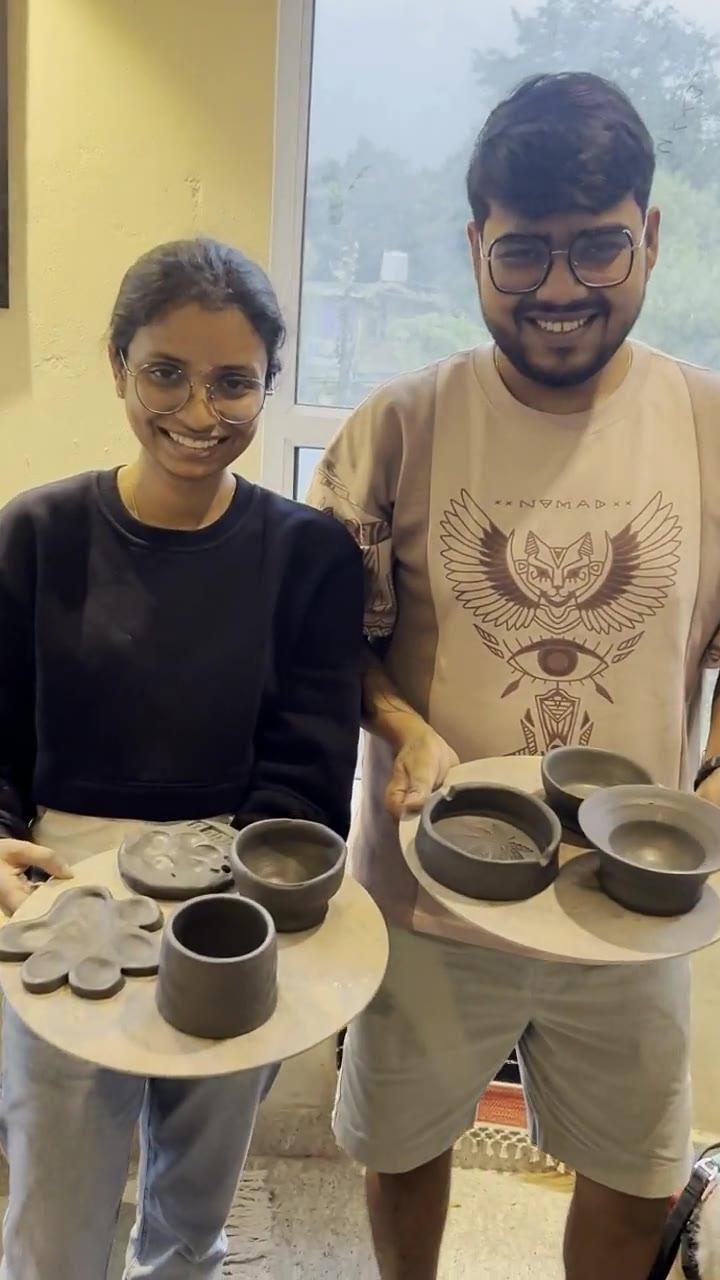
Your meals
Three meals a day, brought to you
Breakfast, lunch and dinner — clean, homemade Indian food, delivered to your room or eaten at the studio. Veg and non-veg; allergies, coeliac and vegan diets accommodated with notice.
Nothing is cooked in bulk and left standing. If you plan to be out for a meal, tell us the evening before and we simply will not make it. Food cooked for you, not for a room.
Around you
Rakkar
Rakkar sits below McLeod Ganj among a cluster of villages, the Dhauladhars directly above. Terraced fields, slate roofs, birds instead of traffic.
Nature walks start at the door. Bhagsu and Dharamkot sit above for waterfalls and cafés, Gyuto Monastery and Norbulingka are a short drive, and McLeod Ganj is twenty minutes away.
Your investment
One fee. Everything in it.
Tuition, your room, three meals a day, all clay and glazes, the firing of everything a course normally produces, and your arrival transfer — quoted as a single number so there is nothing to work out after you land.
Three weeks costs less per day than two, and is the point at which the glaze and studio-practice modules fit properly. Most guests take it.
| Course | The Mud House | The Premium Room |
|---|---|---|
| 2 weeks10 studio days | ₹90,000≈ $952 | ₹1,10,000≈ $1,164 |
| 3 weeks15 studio days | ₹1,30,000≈ $1,375 | ₹1,60,000≈ $1,693 |
Inclusive of all Indian taxes. USD figures are estimates at the European Central Bank rate of 2026-09-04; the rupee amount is what is actually charged and your bank applies its own rate on the day.
Included
- All tuition — 50 or 75 guided studio hours with Madhumita
- A wheel of your own, for the whole course
- Private room for 15 or 22 nights, arrival night included
- Three homemade meals a day, delivered
- All clay for the course, generously
- All tools and studio equipment while you are here
- All glazes, slips and underglazes used in teaching
- Bisque and glaze firing of your first 10 kg of finished work
- Studio apron, and a personal tool kit to take home
- Pickup from Gaggal (Dharamshala) airport on arrival
- Professional packing of your finished work for the flight
Not included
- International flights and Indian visa
- Travel and medical insurance — please do carry it
- Cafés, and meals eaten out on your rest days
- Personal travel, taxis and excursions on rest days
- International shipping of finished work — not available
- Domestic shipping within India, arranged at cost
- Glazing beyond the course work — ₹800 per kg, or ₹1,200 per kg for underglazes
- Firing beyond the first 10 kg, and any piece large enough to need a cabin of its own (see the firing rates)
If you make something big
A kiln is sold by the room your work takes up, not by what it weighs. Small pieces share a firing with everyone else's and are billed by weight. A tall vase or a wide platter can occupy a cabin — or the whole kiln — on its own, and then nothing else can go in beside it, so it is charged for the space instead. Madhumita tells you which applies before a piece goes in, never after it comes out.
- Shared firing, small work₹800 per kg
The first 10 kg of your finished work is included in the course fee.
- One cabin₹1,600
One piece, or a set, that needs a shelf to itself.
- Two cabins₹3,000
A tall or wide piece taking roughly half the kiln.
- Full kiln load₹5,000
A single piece, or a body of work, filling the kiln.
These are the studio’s standard kiln rates — the same ones an independent potter pays here.
Reserve your dates
A 30% deposit holds the wheel and the room.
The balance falls due 30 days before you arrive, and we send a payment link for it. Dates can be moved once, free of charge, up to 30 days before you travel.
Before you book
The questions people actually ask.
Cancellation & refund termsFree to move your dates once, up to 30 days before you arrive. Cancel more than 60 days out and you get everything back bar the card fee. Inside 30 days we cannot re-let the room or the studio, so the deposit is kept — and inside 15 days, the full fee.+
- 60 days or more before your start dateFull refund
Everything you have paid is returned, less the payment-processing fee our bank does not refund us (about 3% of the amount paid). Nothing has been committed on your behalf at this point.
- 30 to 59 days beforeDeposit retained (30%)
Your room is being held and your studio dates are off the calendar. If you paid in full, everything above the deposit is refunded to you.
- 15 to 29 days before50% of the course fee retained
By now your accommodation has been booked and paid for on your behalf, and two or three weeks of studio time cannot realistically be filled at this notice.
- 14 days or fewer, or not arrivingNo refund
The room is paid, the food is ordered and the teaching days are gone. This is the window travel insurance exists for, which is why we ask you to carry it.
The full point-by-point terms — date changes, visa refusal, what happens if we cancel — are shown in the booking form above, and you accept them there before paying. Deposits are available for start dates 45+ days away; the balance falls due 30 days before you arrive.
Do I need any experience?+
None. The course starts at wedging a lump of clay and assumes nothing. It is built for someone who wants to leave able to throw, rather than someone who already can — if you have a practice already and mainly need space and a kiln, a self-directed residency will suit you better than this will, and we are happy to say so.
How many people will be in the studio?+
Six at the most, and usually far fewer. There is one wheel and for the length of your course it is yours — not shared, not booked in slots. Two more wheels are on order; even once they land, an immersion guest keeps a wheel of their own. Madhumita teaches every session herself.
What are the hours, and when are the days off?+
Five days a week in the studio, 11 AM – 5 PM, with an hour for lunch in the middle — 5 hours at the wheel each day, run as roughly 45 minutes of your own practice followed by 15 minutes of feedback, over and over. Madhumita is in the room throughout. Two days a week are yours. Most guests take Monday and Tuesday, when the valley is quietest, but the days are yours to choose and we set them with you before you arrive.
Will I be able to take my work home?+
Yes, and we plan the firing calendar backwards from the day you leave so that it happens. A piece has to dry, be bisque fired, be glazed and be fired again — a fortnight, comfortably. Everything from your first weeks is finished and in your hands before you fly, and we pack it for the aircraft ourselves. Work made in the final days we fire afterwards and hold, or ship within India. We do not ship internationally.
When is the best time to come?+
March to June and September to November are the easiest months: long dry days, clear mountains, and clay that behaves. July and August are the monsoon — beautiful and green, but drying is slower and we build a little more time into the schedule. December to February is cold, bright and very quiet, and a fine time to work if you do not mind a heater.
What if I want to make something big?+
Please do — but talk to Madhumita before you start it, because a large piece changes what the firing costs. A kiln is sold by the room your work takes up, not by what it weighs: a tall vase or a wide platter can occupy a whole cabin on its own, and once it does nothing else fits beside it. Small work shares a firing and comes out of your included allowance; anything needing a cabin to itself is charged at the studio's normal firing rates, which are listed on this page. You will always be told which applies before the piece goes in.
How does the deposit work?+
A 30% deposit confirms your dates and holds both the studio place and the room; the balance falls due 30 days before you arrive, and we send a payment link for it. A deposit is only offered when your start date is at least 45 days away — closer than that and the full fee is due at booking, because there is no time to run a balance. Dates can be moved once, free of charge, up to 30 days before arrival.
Can I pay from outside India?+
Yes. International cards work, and the charge is made in Indian rupees — the figure shown in your own currency is an estimate at today's exchange rate, and your bank applies its own rate on the day. The rupee amount is the one that is actually charged, so there is never a surprise on our side.
Still deciding? Ask Madhumita directly.
She answers these herself, usually the same day — including the awkward one about whether 3 weeks is really necessary.