Guide
A Short Guide to Indian Pottery Traditions
Khurja, Jaipur blue, Kutch, Longpi, Bankura and Andretta — the living pottery traditions of India, what makes each distinct, and which ones you can visit.
India has one of the longest unbroken pottery histories anywhere — wheel-thrown vessels here predate most of what gets called ancient elsewhere — and, unusually, much of it is still being made rather than only displayed.
This is a short guide to the traditions worth knowing, what physically distinguishes each one, and which you can go and see.
Khurja, Uttar Pradesh
The country's best-known pottery town, and the reason so much Indian glazed tableware looks the way it does. Khurja works in glazed stoneware and earthenware, often floral, often on a cream ground, at genuine industrial scale alongside small workshops.
If you have bought glazed Indian crockery without being told where it came from, there is a fair chance it came from here.
Jaipur blue pottery
The most visually distinctive tradition in the country, and technically the odd one out: Jaipur blue pottery contains no clay at all. The body is quartz powder, powdered glass, borax and gum, which is why pieces are low-fired, slightly translucent, and more fragile than they look.
The palette — cobalt blue, turquoise, white — arrived via Persia and Central Asia. It is a craft that came a long way and settled.
Kutch, Gujarat
Terracotta with painted geometric and animal motifs, made by communities whose work carries a distinct desert vocabulary. Kutch pottery sits alongside the region's textile and mirror-work traditions and shares their sense of pattern.
Longpi, Manipur
The one that surprises people. Longpi pottery is made without a wheel — hand-built from a mix of weathered serpentine rock and clay, then polished. The result is a dense, matte, charcoal-black stoneware that goes on a flame directly.
It is unlike anything else on this list, and its technique is closer to stone-working than to throwing.
Bankura, West Bengal
Terracotta, and home to the Bankura horse — the long-necked stylised horse that became a general symbol of Indian craft. The region's larger tradition of terracotta temple ornament is the wider context; those horses were votive objects long before they were living-room objects.
Andretta, Himachal Pradesh
Which brings the list to our own valley.
Andretta, toward Palampur in the Kangra Valley, has been an artists' colony since the 1930s — the Irish theatre figure Norah Richards settled there, the painter Sobha Singh has a gallery there still, and the Andretta Pottery and Craft Society has been teaching and making for decades in the slipware tradition.
For anyone with an interest in clay travelling through Himachal, Andretta is a half-day trip worth building a morning around. Check current opening days before you go, particularly out of season.
Where the studio fits — and does not
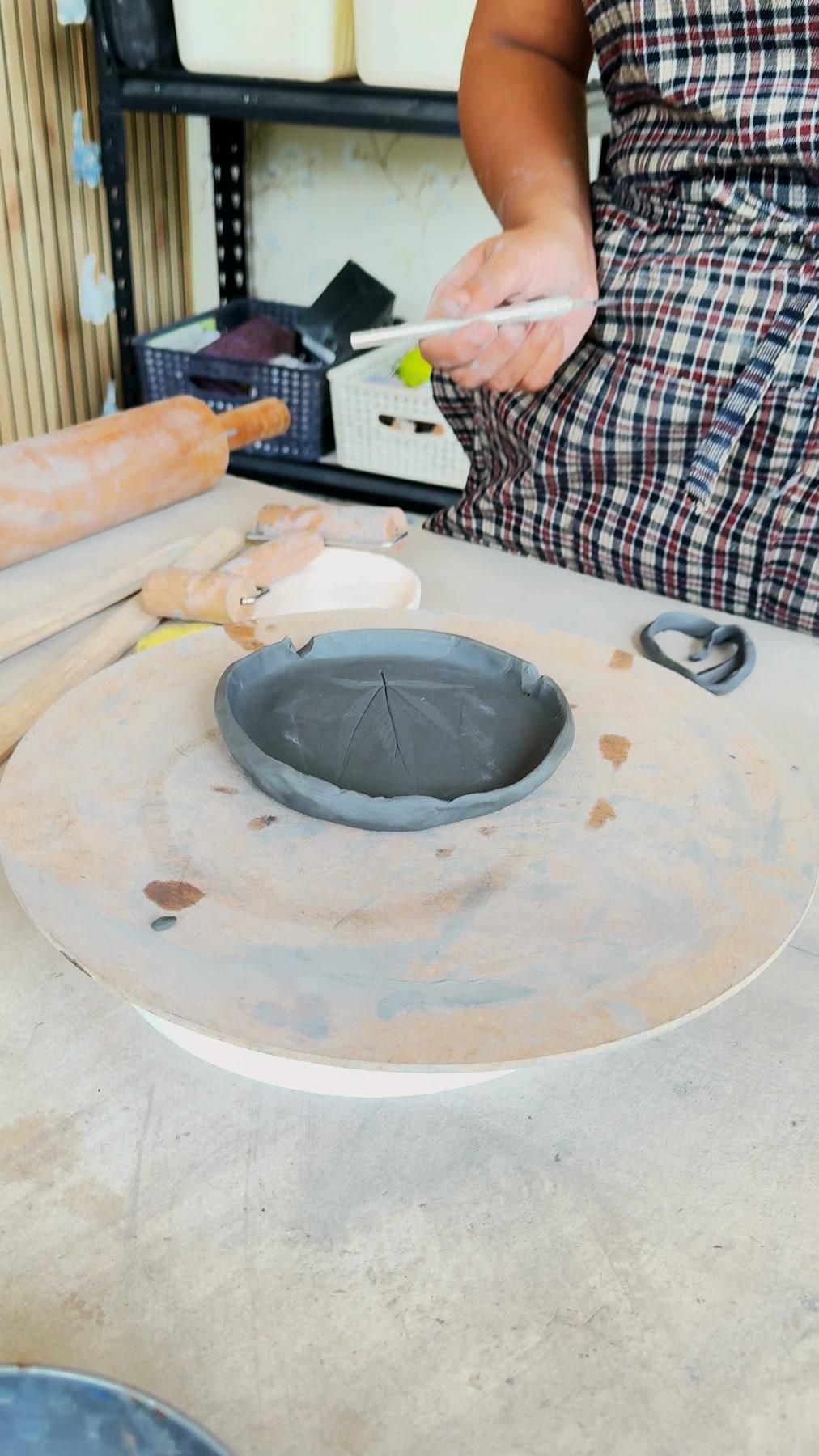
We are not a traditional pottery. Mita Pottery Studio in Rakkar is a contemporary studio: wheel-thrown and hand-built stoneware, botanical imprinting, glazes chosen rather than inherited. Being clear about that seems more useful than borrowing a lineage.
What the traditions above give a beginner is a sense of how wide the material actually is. Nearly everyone arrives picturing one thing — a spinning wheel, a brown pot — and these six show you clay without a wheel, clay without clay, clay as architecture and clay as cookware.
Making a craft trip of it in the Kangra Valley
If you are in this part of Himachal, the craft is unusually dense:
- Norbulingka Institute, near Sidhpur — Tibetan thangka painting, woodcarving, metalwork and applique, with workshops you can watch.
- Kangra Art Museum, Dharamshala — the Kangra school of miniature painting, which gave its name to an entire tradition.
- Andretta, toward Palampur — pottery, and the Sobha Singh gallery.
- Our studio at Rakkar — where you can stop watching and put your hands in it, which changes how you see all of the above.
The fuller version of that route is in things to do in Dharamshala beyond the monasteries.
A note on where to buy
If you want to bring a tradition home, buy it where it is made, from the people making it. Prices at source are usually lower and the money lands in the right hands. That advice costs us a sale occasionally and it is still the right advice.
Curious enough to try it?
An afternoon at a wheel is the fastest way to understand why any of these traditions look the way they do. See what we run — or message the studio on WhatsApp if you are planning a craft route through the valley and want a local opinion on the order to do it in.
Keep exploring
Book a session
Tell us the dates you are around and we will confirm a slot — or just message +91 88796 54294 and ask us anything first.