Taught pottery retreat · Rakkar, Himachal Pradesh
A pottery retreat in the Himalayas, for one week or two
Come for seven nights or fifteen, in Rakkar, a village above Dharamshala, with the Dhauladhar range on one side and a wheel in front of you. Either way, studio days are five hours each, taught by Madhumita, three homemade vegetarian Indian meals a day are delivered to where you stay, and the free days are yours.
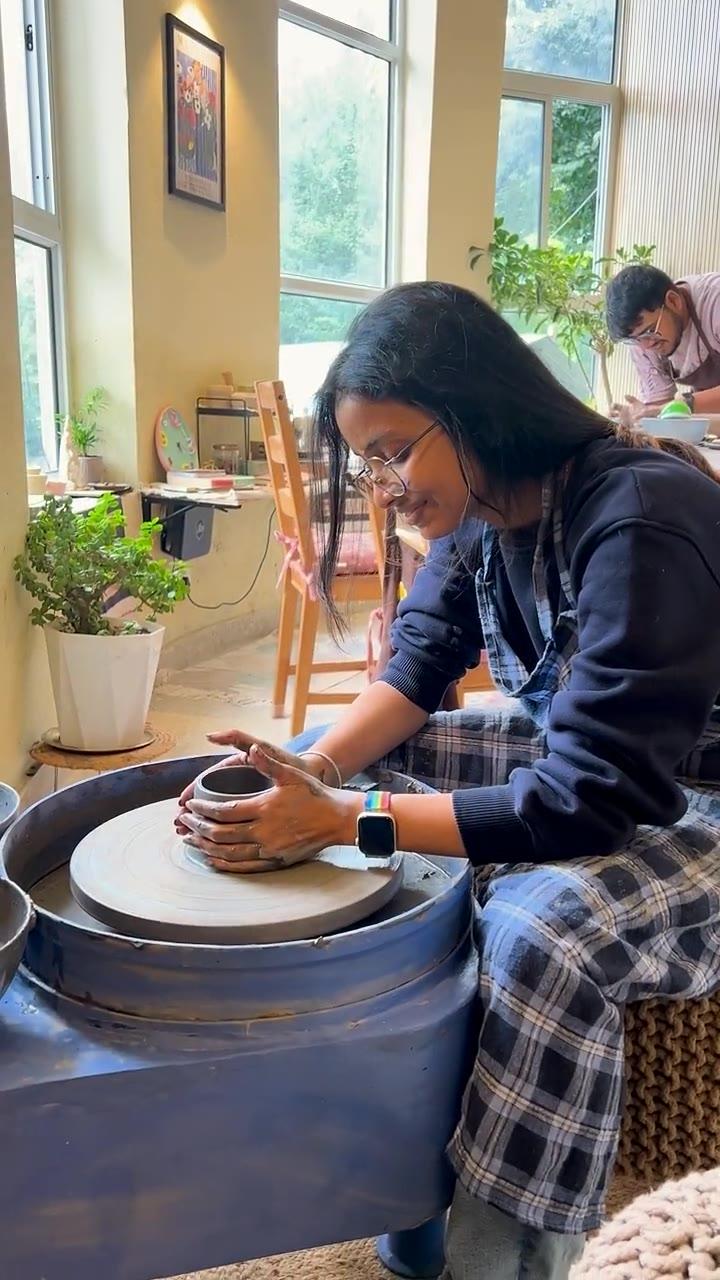
Two ways to come · room, meals and teaching included
One-week retreat
7 nights · 5 taught days · 25 guided hours
Five studio days and two free days for the valley. Enough to get past the part where the clay wins.
Dates
15–22 Nov · 23–30 Nov · 15–22 Dec · 23–30 Dec
From ₹53,000 per person
Book one weekTwo-week retreat
15 nights · 10 taught days · 50 guided hours
Both weeks back to back, with a wheel of your own. Long enough to leave able to throw.
Dates
15–30 Nov · 15–30 Dec
From ₹90,000 per person
Book two weeks- Three meals a dayHomemade vegetarian Indian food, delivered to your room
- Six people at mostMadhumita teaches every session herself
- Beginners to advancedNo experience needed for either length
Book your place
Book your retreat
One week or two weeks, then your dates and your room. The price, what is included and the shape of the day update as you choose. A deposit holds your place.
4 · Reserve your place
What a retreat week looks like
Five studio days, five hours each, in every week you are here: one week has five, two weeks have ten. That is the spine of it, and everything else is arranged around your energy rather than a timetable. A studio day usually runs late morning into the afternoon with a long break in the middle, because five hours of clay in one unbroken stretch is more than most hands want in the first week. The days in between are genuinely free — some people walk to Naddi or down into Dharamshala, some sit in the studio anyway and work on something quietly, and a few sleep for most of the first one. Nobody minds. This is a mountain pottery retreat, not a course you can fall behind on.
One week or two: what each changes
One week is twenty-five guided hours. It is not enough to make you a potter, and anyone promising that in a week is selling something, but it is enough to get past the part where the clay wins. Two weeks is fifty hours and a wheel of your own for the whole stay, which is where throwing starts to feel like yours rather than borrowed. Most people spend the first day on touch and centring, find the wheel somewhere on day two, and by the fourth are making decisions about form rather than fighting the material. If you would rather not use the wheel at all, hand-building — pinch, coil and slab — fills the same twenty-five hours and produces better first objects. Advanced makers usually arrive with a shape they have been circling for a while and use the time to get through twenty attempts at it.
A mud house, and food cooked in the village
You stay in a mud house — actual mud, the way houses here have always been built, which means thick walls, cool afternoons and warm evenings without much help from anything electrical. Three homemade vegetarian Indian meals a day are cooked in the village and delivered to where you stay: breakfast, lunch and dinner, the food the kitchen would be making anyway. It is not a hotel and does not pretend to be one. The trade is that you are living in the village rather than visiting it, which is most of the reason people come to the Himalayas to work with clay instead of doing it in a city.
Who this suits, and who it does not
It suits people who want a stretch of unhurried time and do not need it filled. Beginners who have wanted to try clay for years and never had more than an afternoon. Makers with some experience who want consecutive days rather than a weekly class. Artists in other media who want to think in three dimensions for a fortnight. It does not suit anyone looking for a packed itinerary, a certificate, or a large group to be sociable with — the studio is small, and most of the time there will be very few of you. If you want a two-hour taster instead, that is what the workshops are for, and they are the honest recommendation for a short trip.
When to come
March to June is the easy answer: long light, rhododendron on the slopes, and clay that dries at a sensible rate. The monsoon, July into September, is greener than anywhere you have been and slows drying right down, which some people find frustrating and others find is exactly the pace they came for. October and November are the clearest months in the Kangra Valley — the Dhauladhars are visible most mornings. Winter is cold, quiet and very good for working, but the mud house is warm rather than heated and the kiln schedule stretches. This winter's retreats run on set dates in November and December, one week or two; the dates are at the top of this page.
The parts nobody puts on an itinerary
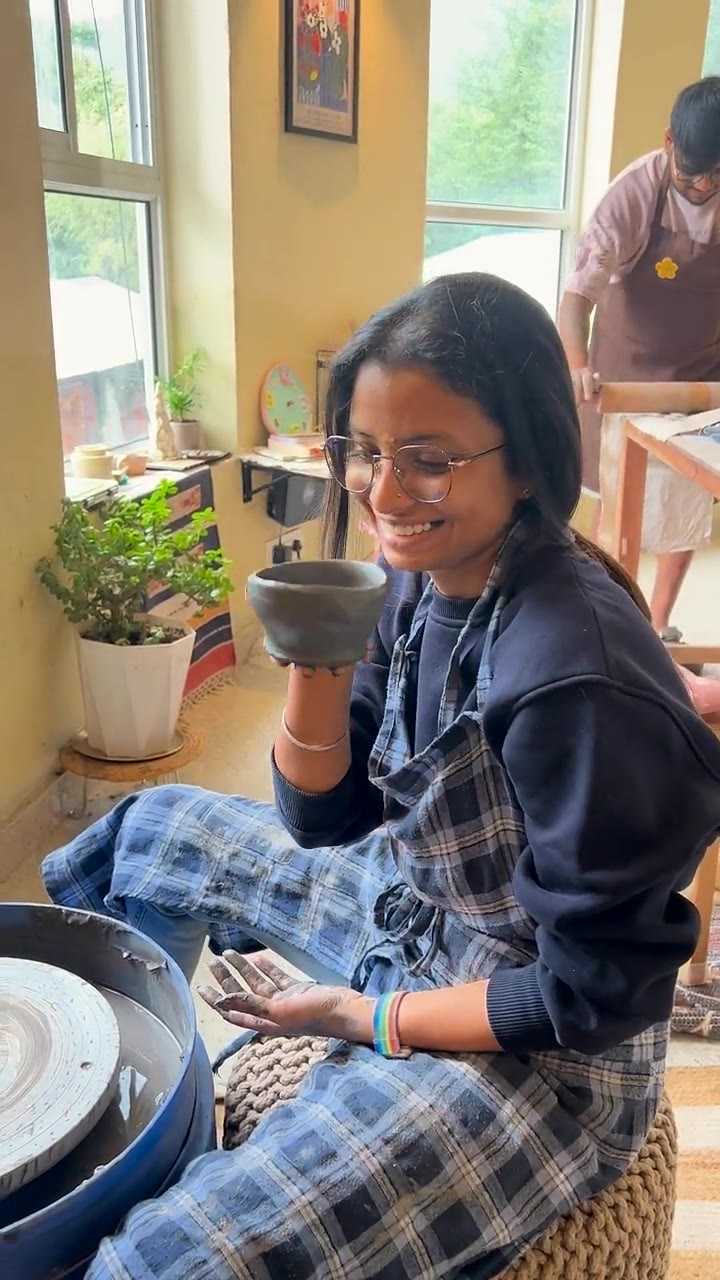
Her own cup, first sip
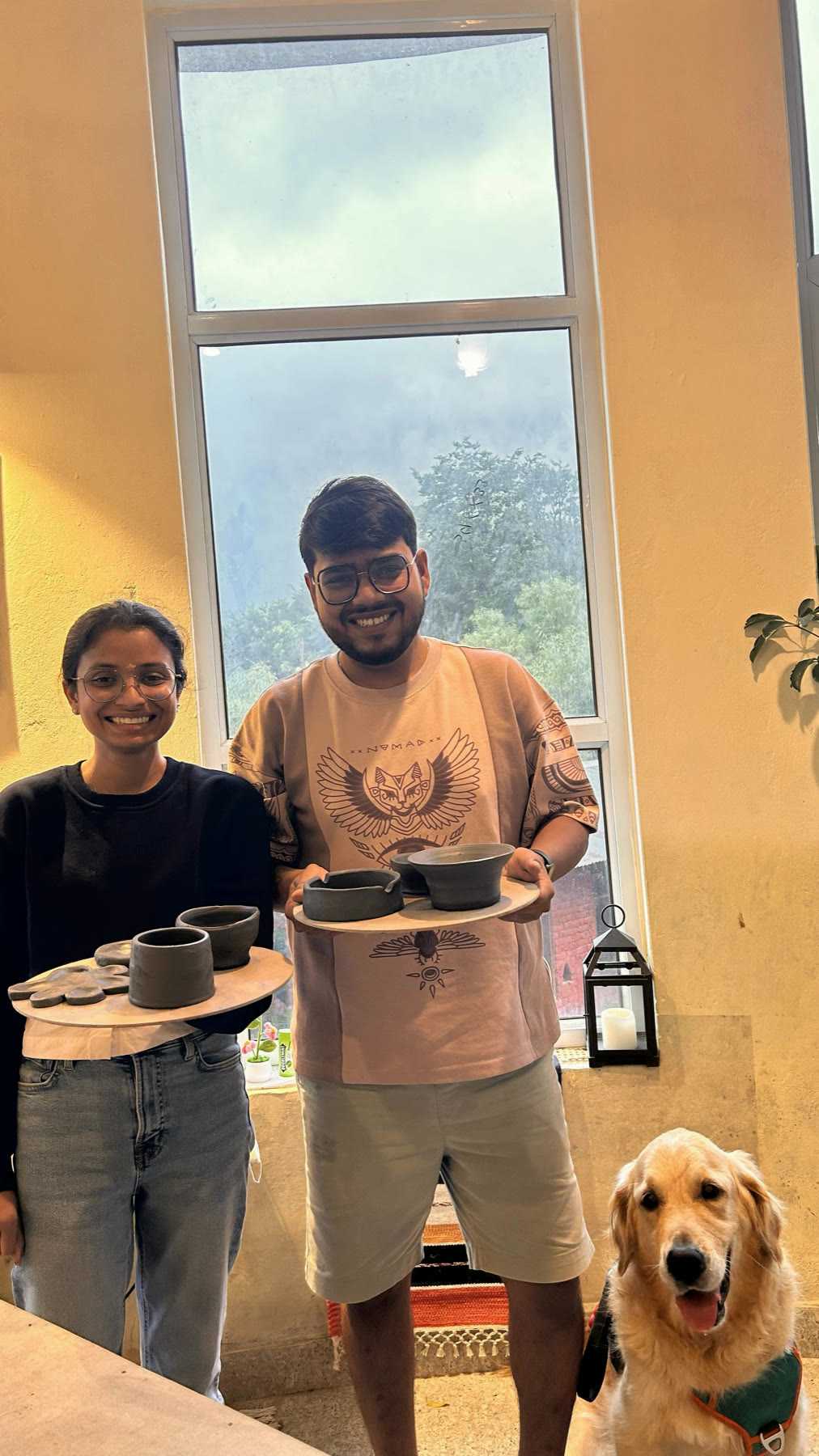
A fortnight's shelf, going home
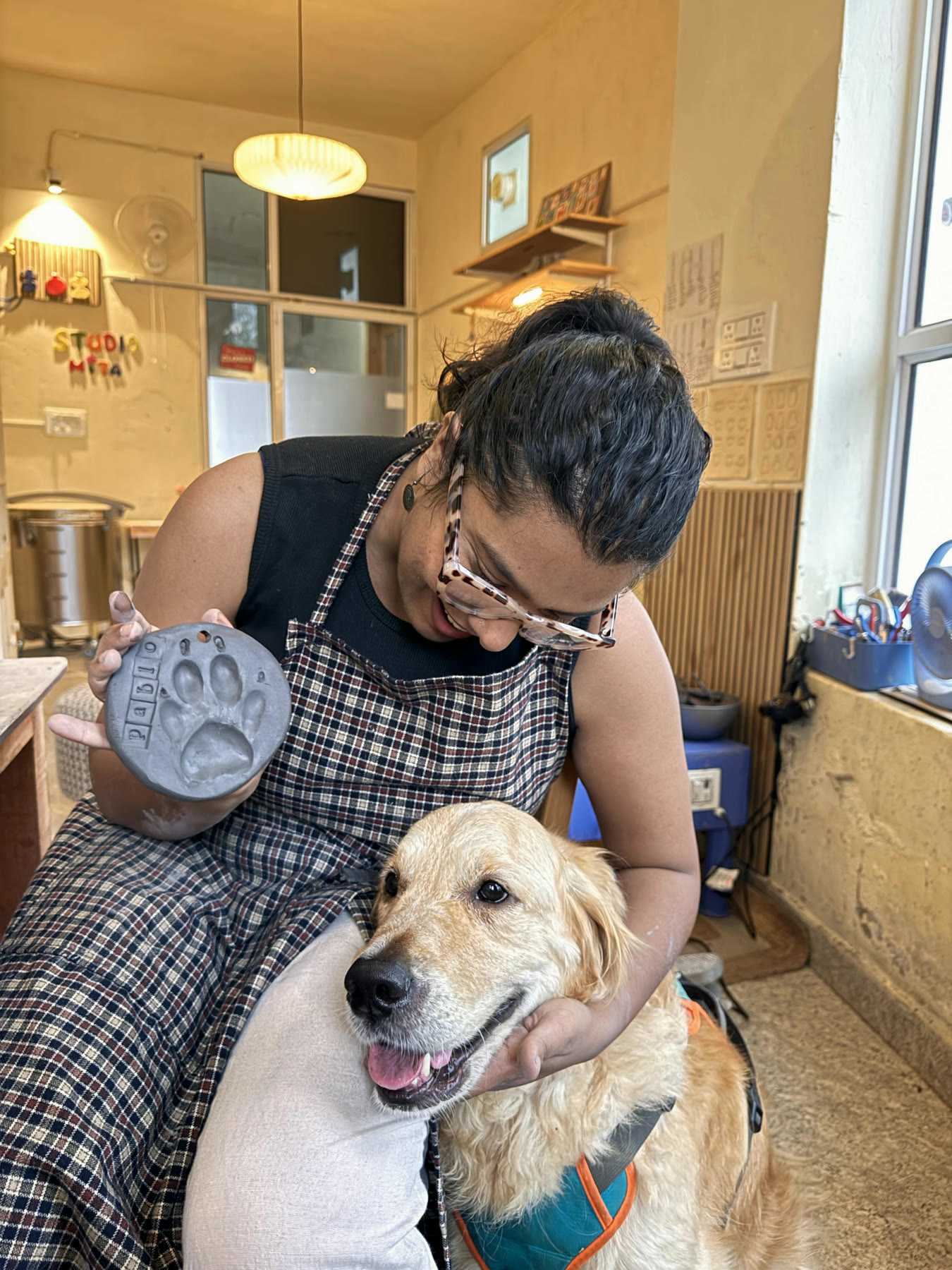
She pressed his paw into it
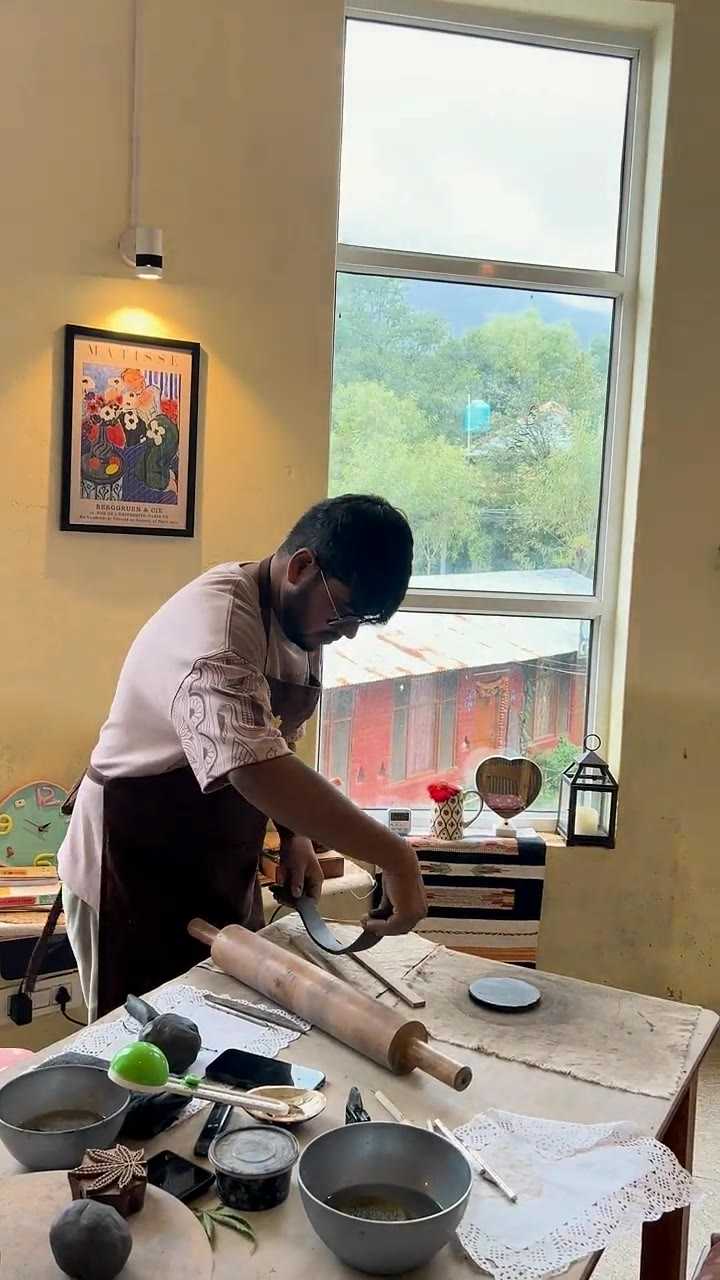
Rolling out, hills behind
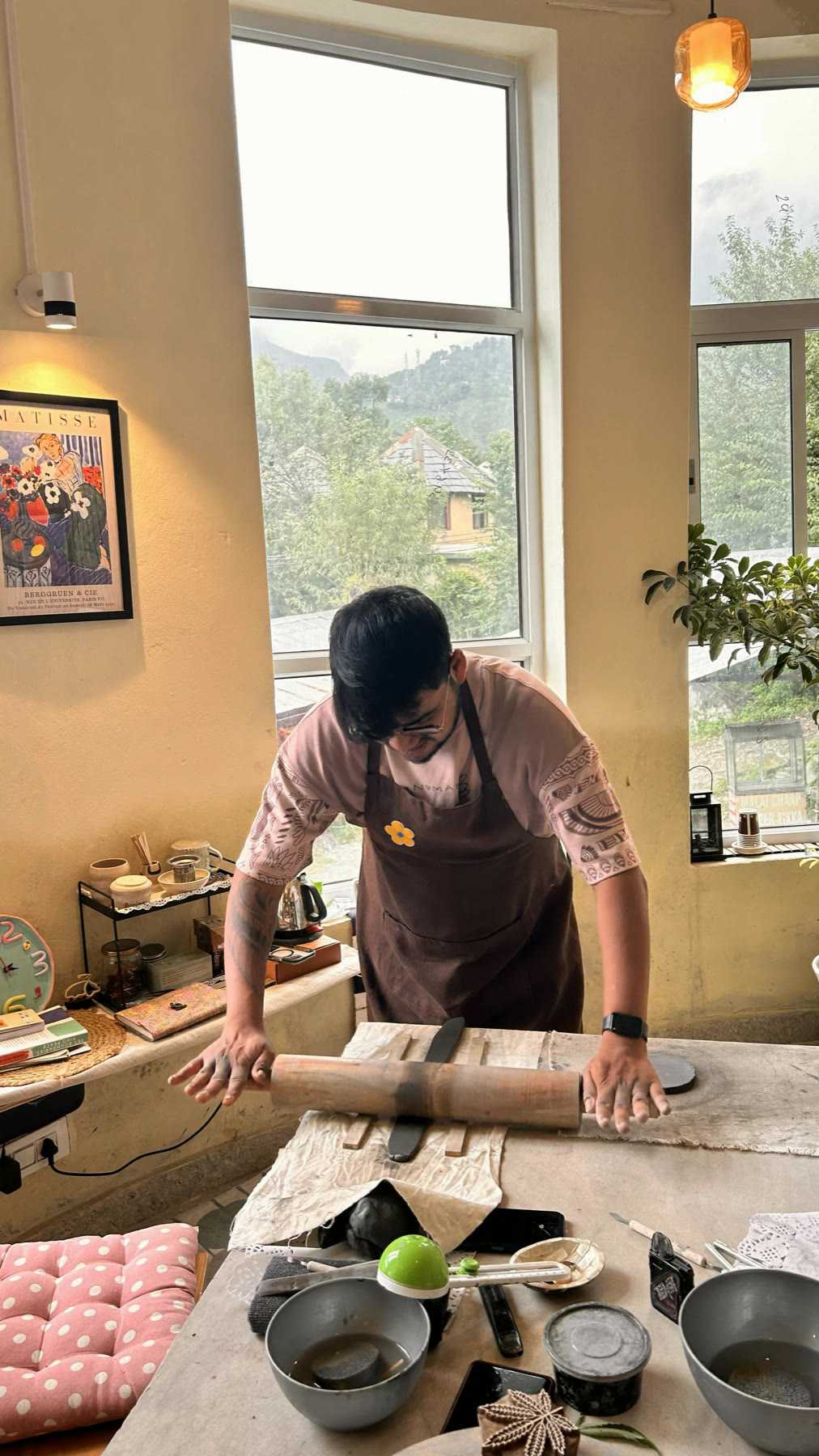
The seat everyone fights for
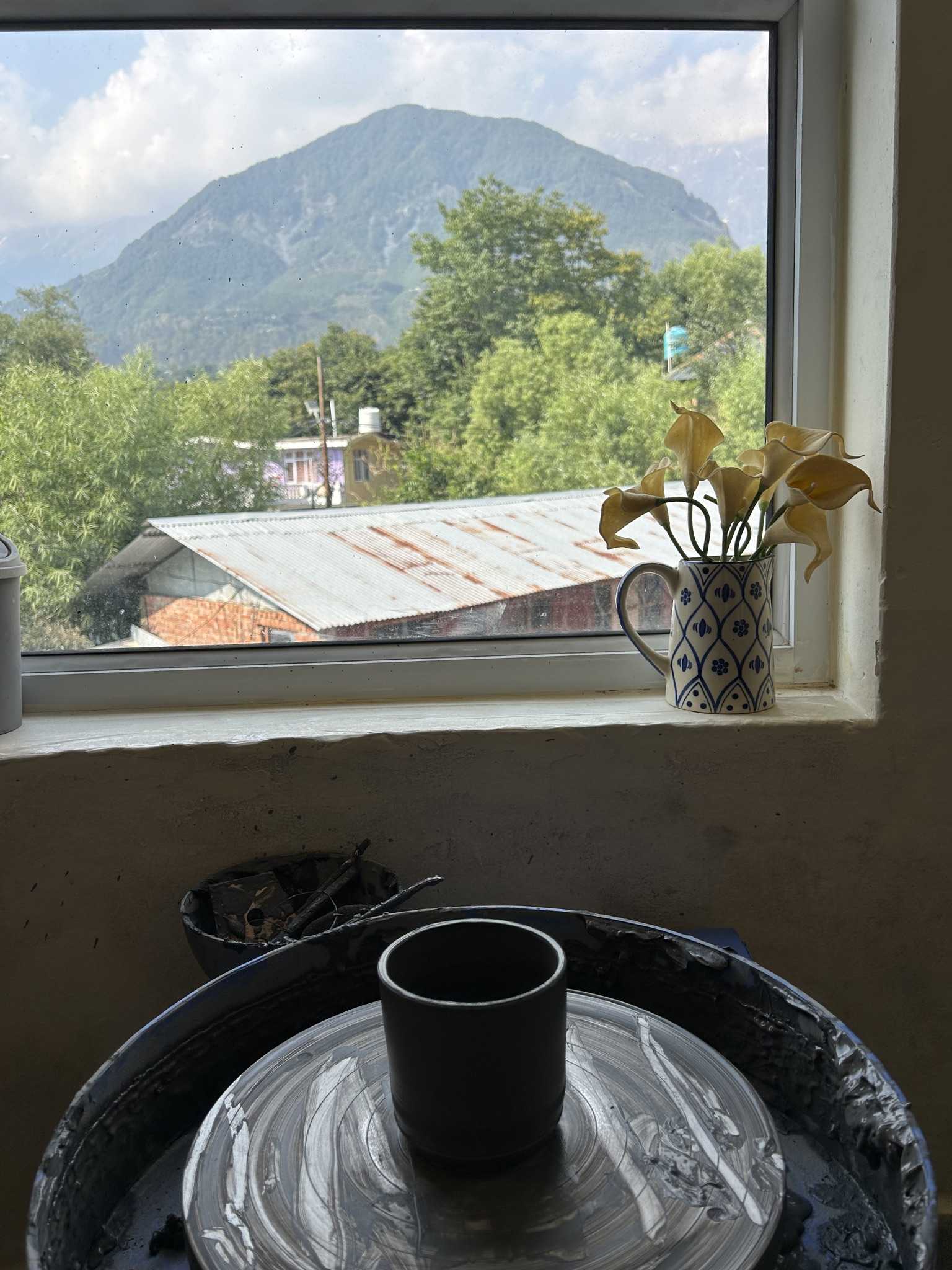
Left on the wheel overnight
Questions
How long is the pottery retreat?
One week (seven nights, five taught studio days) or two weeks (fifteen nights, ten taught studio days). Studio days are five hours each; the rest are yours. Both run on published dates, which you choose and book on this page.
How much does a pottery retreat in Himachal cost?
One week is ₹53,000 in the mud house or ₹63,000 in the premium room. Two weeks is ₹90,000 or ₹1,10,000. Every figure is per person and includes your room, three meals a day, all teaching, clay, glazes, a firing allowance and Indian taxes. A deposit reserves your place.
Do I need any pottery experience?
None at all. Roughly half the people who come have never touched clay. The first studio day starts with touch rather than technique, and Madhumita teaches every session herself, so the pace follows your hands rather than a syllabus. Experienced makers are equally welcome and generally use the time differently.
Where exactly is the retreat?
Rakkar village, in the Kangra Valley above Dharamshala, Himachal Pradesh. The studio is on Rakkar Road, a short drive from Dharamshala and McLeod Ganj, with the Dhauladhar range visible from the windows. The nearest airport is Gaggal (Kangra), and Pathankot is the usual railhead.
What is included?
Your private room, three homemade vegetarian Indian meals a day delivered to where you stay, all studio time and teaching, clay, glazes, tools, and bisque and glaze firing of your first five kilograms of finished work. Airport pickup at Gaggal is included. Flights and travel to Dharamshala are yours to arrange.
Is it really a mud house?
Yes — traditional mud construction, which is why the rooms stay cool through the afternoon and hold warmth in the evening. It is comfortable and simple rather than luxurious. If you are expecting hotel fittings this is the wrong booking, and we would rather say that now than have you discover it on arrival.
Can I come on my own?
Most people do. A solo pottery retreat works well here precisely because the studio is small and the days are not scheduled — you can be sociable at meals and left alone the rest of the time, which is harder to arrange at a larger place.
Can two of us come together?
Yes, and it is a common booking. You share a room and the studio days, and generally end up making very different things, which is half the interest. Small groups of friends work too — tell us how many and we will say what is possible on those dates.
What happens on the days that are not studio days?
Whatever you want. The valley is walkable, Dharamshala and McLeod Ganj are a short drive, the Tibetan monasteries and Norbulingka are worth a half-day each, and there are ridge walks straight out of the village. Some guests use a free day to keep working in the studio instead. There is no organised programme and no obligation to leave the balcony.
Can I take my work home?
Usually not in your luggage. Clay is fired twice and glazed work takes three to six weeks, which is longer than your stay. We fire everything and ship it to you afterwards — ₹350 a piece within India. Anything still here after a month gets cleared, so tell us where to send it before you go.
How is this different from the artist residency?
The retreat is taught — Madhumita is with you for the studio days, and it is built for anyone from a complete beginner upwards. The residency is self-directed studio time for makers who already have a practice and a project in mind. Some people do a retreat first and come back for a residency later.
When is the best time of year to come?
March to June for long light and easy drying, October and November for the clearest mountain views, the monsoon if you want green and do not mind slow drying, and winter if you want quiet and can handle cold. There is no bad month, only different ones — tell us when you can travel and we will describe that one honestly.
Questions before you book?
Not sure whether one week or two suits you, or want to check something first? Ask here and Madhumita replies herself, usually the same day.
Preview your message
Hi Mita Pottery Studio! I'd like to ask about the pottery retreat.

*When:* Flexible — suggest something
*How long:* Not sure yet
*Who's coming:* Not sure yet
*Where you're starting from:* Not said
*Name:* —

Sent from the pottery retreat page on mitapottery.com
Opens WhatsApp with everything filled in — just hit send. Nothing is charged or committed here.
Prefer to call? +91 88796 54294